
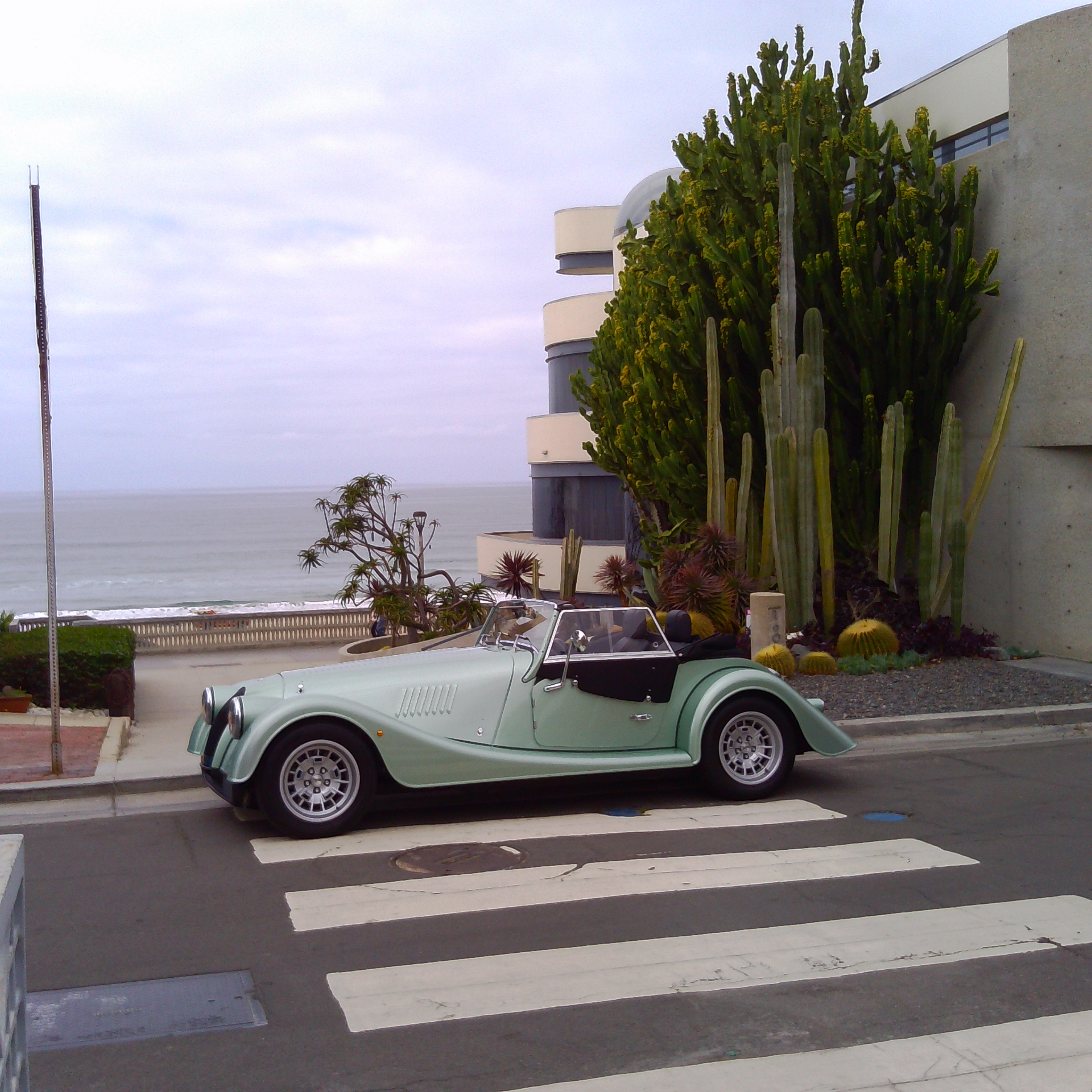
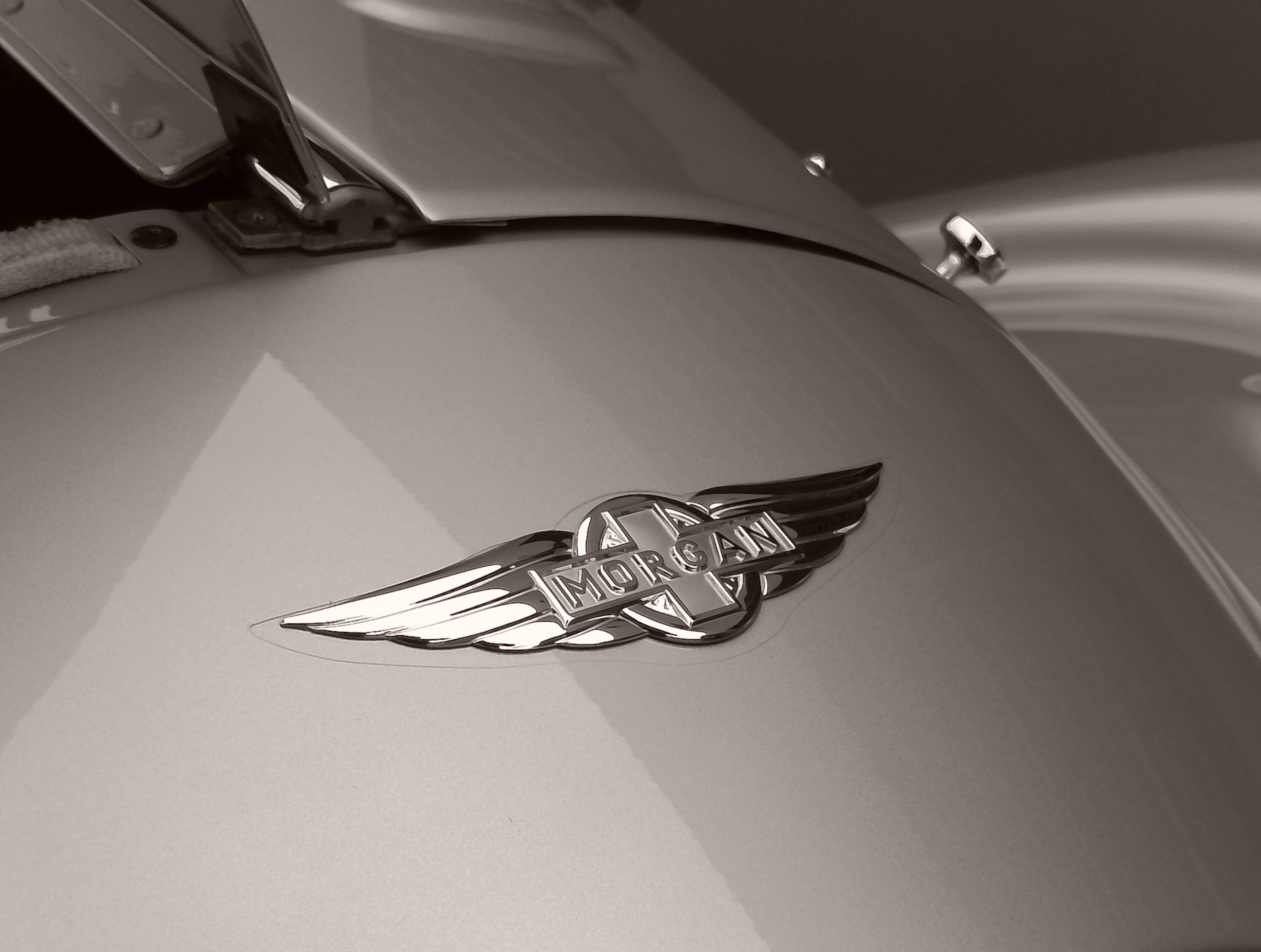
C’mon—you remember Morgan; that wonderfully close-coupled, hand built, utterly British sports car marque that’s produced four-wheeled cars, three-wheelers (with the two up front), two–four–and eight-cylinder powered models, in open roadster and closed coupe form.
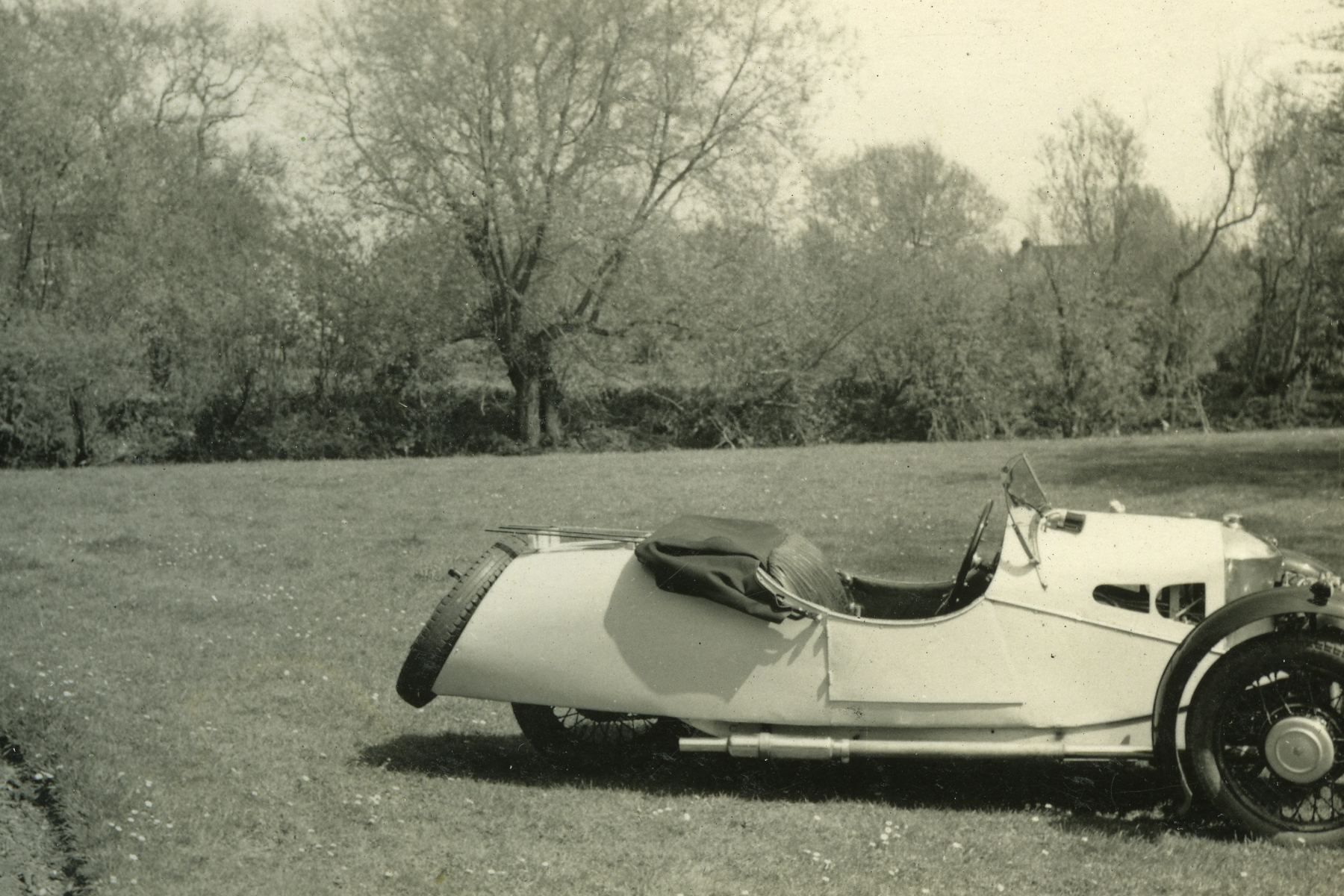
Hardly the best ever composed photo, but who cares — this 3-wheeled Mogie was the late great Sir Stirling Moss’s first car. Photo courtesy of Sir Stirling Moss

Home of the Morgan Car Company, then and now
They’re cute as hell, a blast to drive, and English-charming to a fault. Morgan was founded in 1910, by—who else—but one H.F.S. Morgan. Morgan Motor Company’s fortunes have ebbed and flowed over the decades since then: innovative new models, racing success, financial challenges, ownership changes, and a somewhat spotty reputation in the United States – not because enthusiast drivers (and racers) didn’t like the cars, but Morgan’s dealership, service, and importation network in North America was never fully fledged. A few small independent shops would import cars into North America under the vagaries of U.S. and Canadian importation rules, but there was never a long term, sustainable, distribution network in North America. Some cars came in sans powertrains, with final assembly falling to the aforementioned independent shop; we recall that for a time, Morgan Plus8s (running the 3.5-liter aluminum Buick/Rover/Morgan V-8 — on propane conversions), just snuck in under often obtuse emissions regs in the 50 states.
Bull all that hoary history is much in the past; Morgan now has a committed ownership group, legit financial footing, a thoroughly freshened model lineup, and a North American dealer and distribution plan for properly certifying the cars here, importing them, and supporting service and customer needs. You know, just like a real car company.

Now you can see where the ashwood goes, framework for the alloy body panels, NOT as a chassis under pinning the entire car
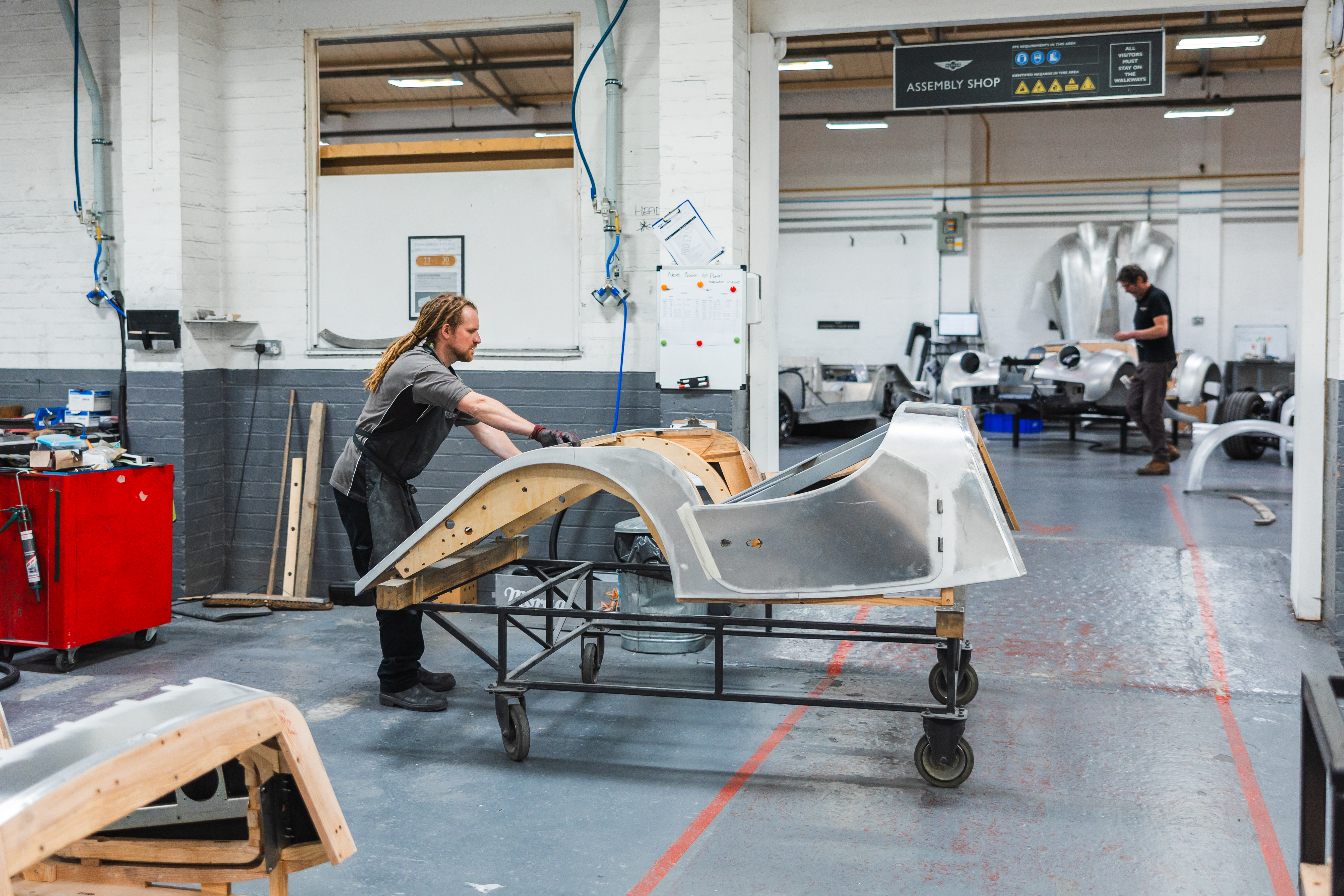
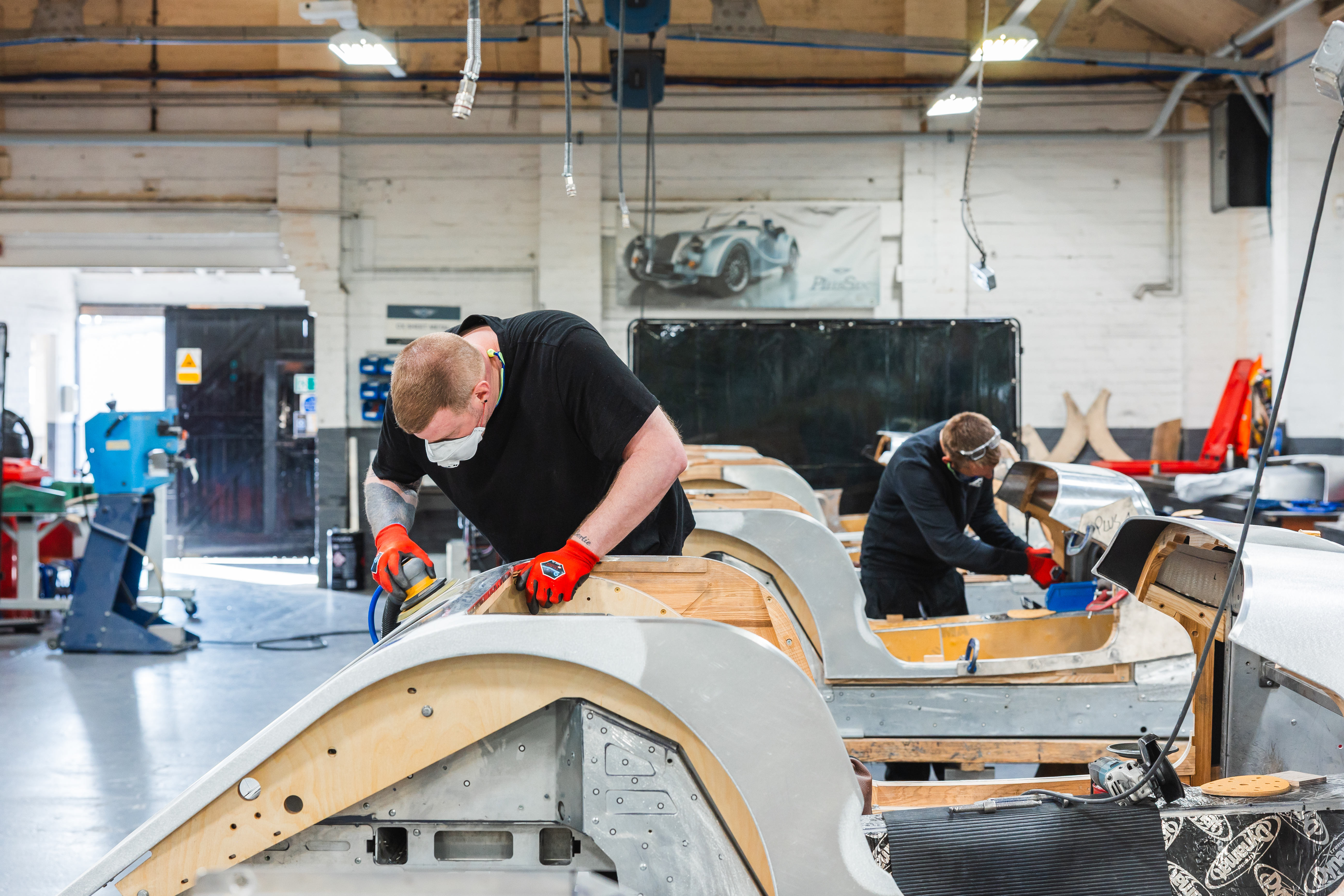
Woodwork, at work
Before we get deep into what makes this new Morgan a new Morgan, and its thoroughly re-engineered powertrain and other systems updates, there is one common misconception that must be addressed, which comes primarily down to semantics. Mark it up to the colloquial and continued confusion about the use of structural ashwood in the car’s body framework; too many folks use the terms “chassis” and “frame” interchangeably.
By extension, its usually (incorrectly) made note of with reference to many Morgan models, dismissively uttered as “who would want a car with a wooden frame?” What they most likely are trying to say is “who would want a car with a wooden chassis?” Afterall, it’s not a horsedrawn wagon. So, it’s critical to understand the difference between a chassis and body framework. Remember: Chassis—Metal. Morgan body framework—Ashwood. In fact, the chassis underpinning the new, more modern Morgans is a bonded aluminum honeycomb structure that’s both relatively light, and structurally strong and stiff. Not wood.
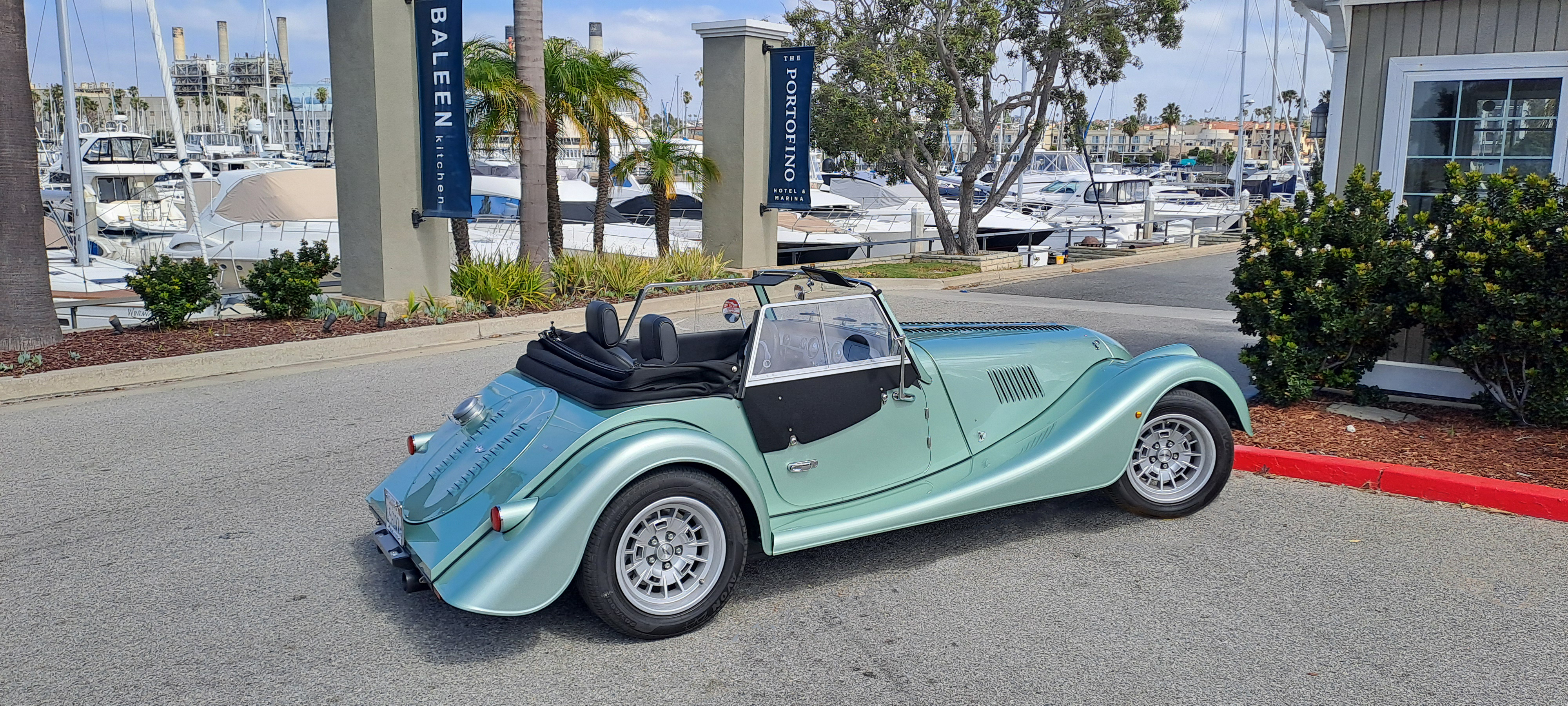
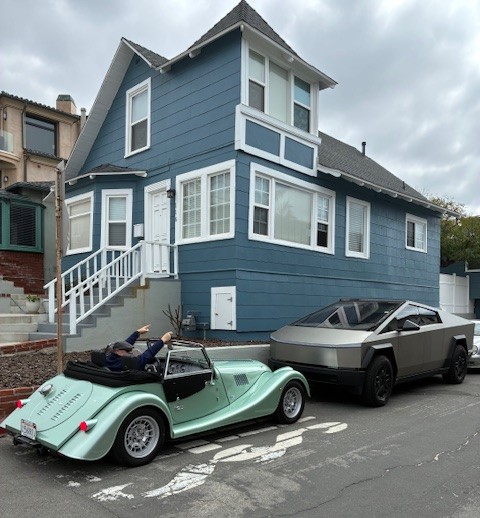
Style points? No contest, PlusFour wins
Our 2025 PlusFour tester was a sparkling light Green (a vibrant metallic hue named Ice Green, that practically glowed) and the new and current version of the PlusFour is a much evolved and up engineered machine than the original Plus Four you may remember that first came to market in 1950. A tidal wave of reengineering and some would say brand-saving evolution, came along with a major technical partnership with BMW – encompassing new powertrains, suspensions, electrics, safety gear and models.
One of the biggest problems/challenges the Morgan company (and cars) suffered was a decidedly spotty, if not outright dodgy, importation, dealership, service, and distribution system in North America. There were all sorts of schemes to get the cars imported, assembled, sold and serviced here in the U.S. Morgan was always a somewhat ignored, “secondary” brand sold at what in the 1960s were often called “imported car stores” or specialty dealers (You know: Renault, Citroen, Sunbeam, and the like). “Factory supported warranty, parts, and service process?” Fhagetaboutit. For a bit there, “specialty” dealers were importing engineless cars that would then be completed, by them, or who-knows-who? And for a time, at least one outfit that would bring in V-8 powered Plus8 models fueled by propane – a quick hack to get around U.S. emissions certification requirements.
Well, yeah, hey – all that’s done and gone now. BMW of course has a full menu of vehicles (hence powertrains) available here that are fully, and legally emissions and safety certified for sale in the United States, so conforming all of that to work in a Morgan chassis made good business and product sense. The previous litany of (variously sourced) Morgan engine and transmission offerings are gone; their replacements now those produced and engineered by BMW just for Morgan–which means pretty darn good stuff.
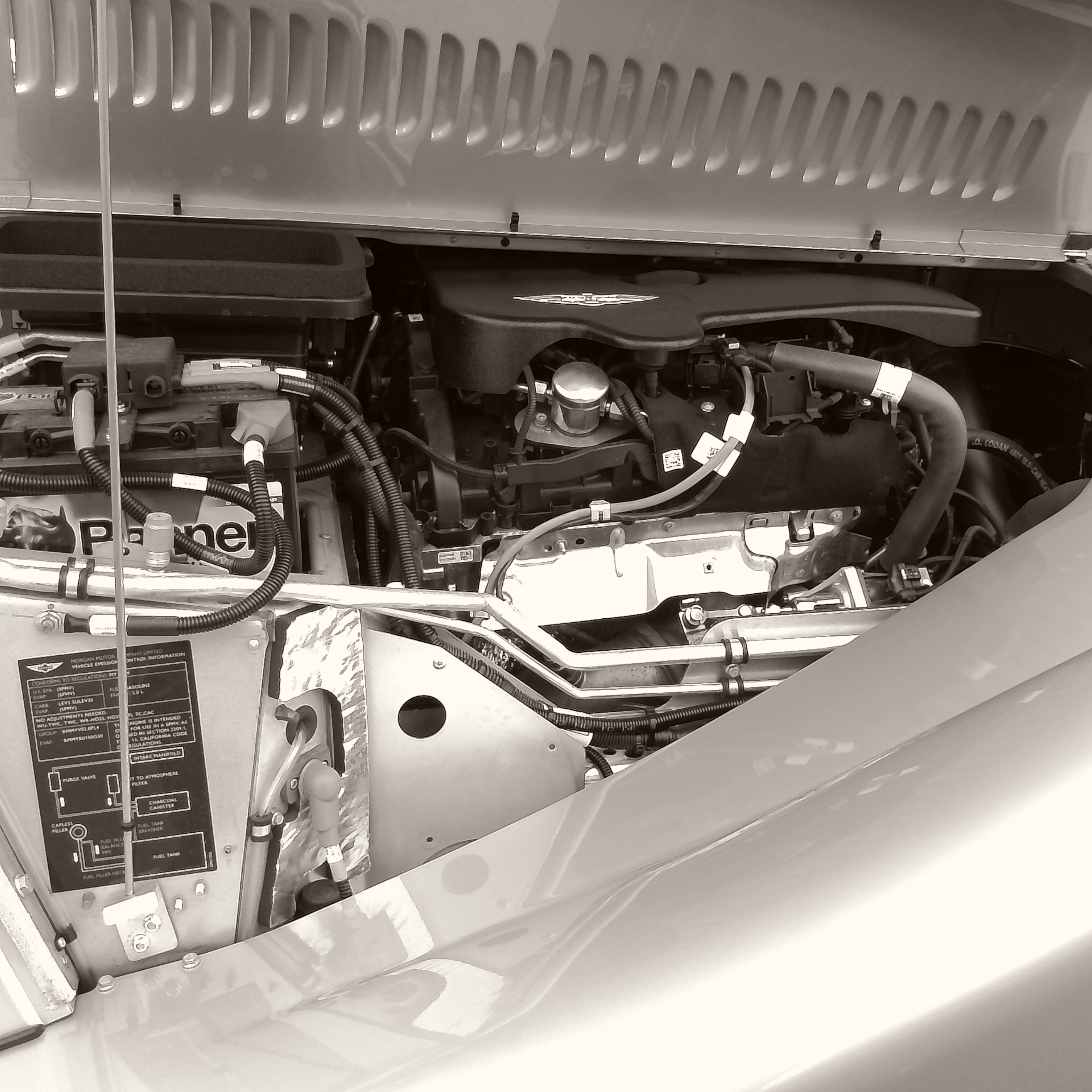
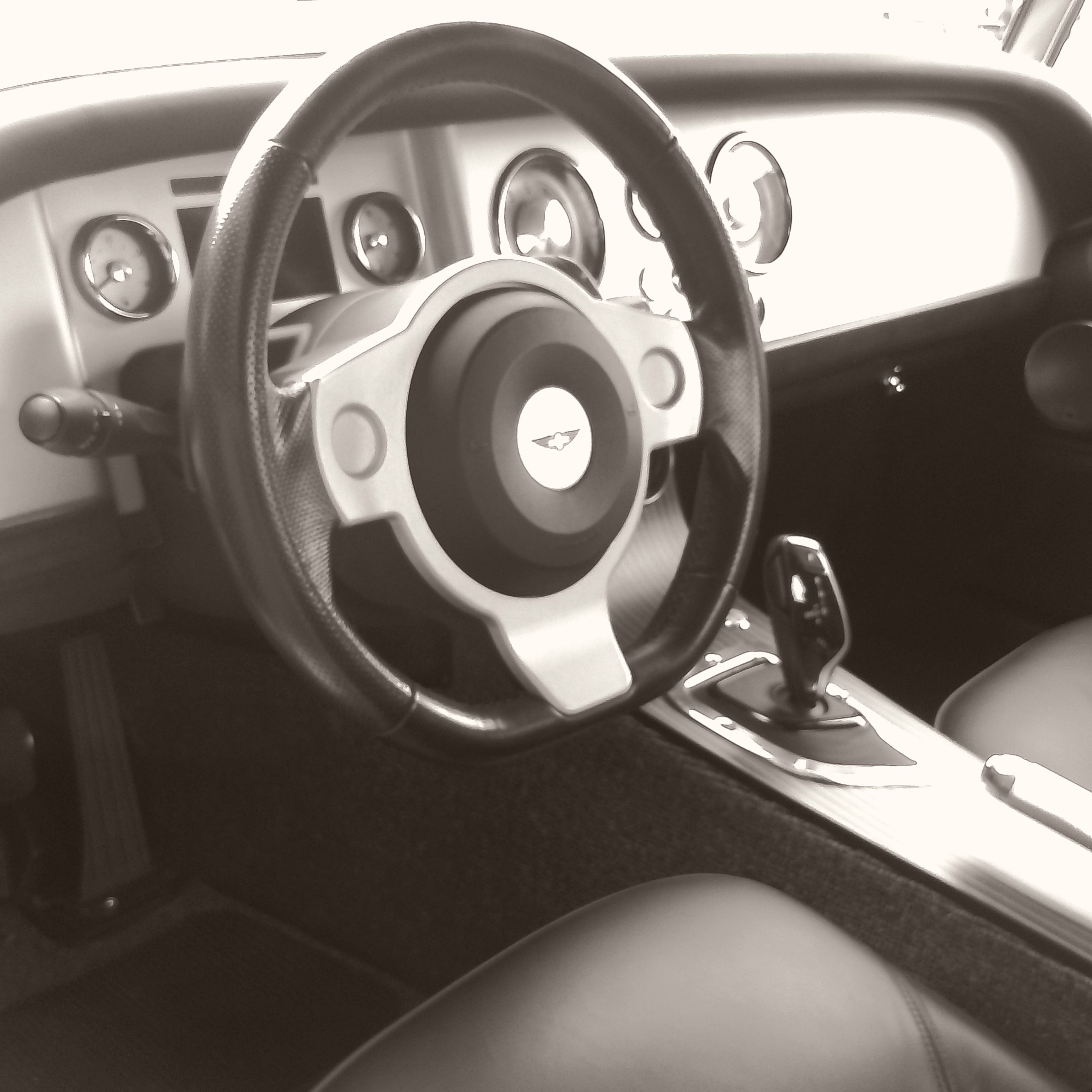
You will pardon me, please, for flicking back and forth between color and B & W photos, but I was experimenting with a new camera in different modes and such. You know; boys and toys and such
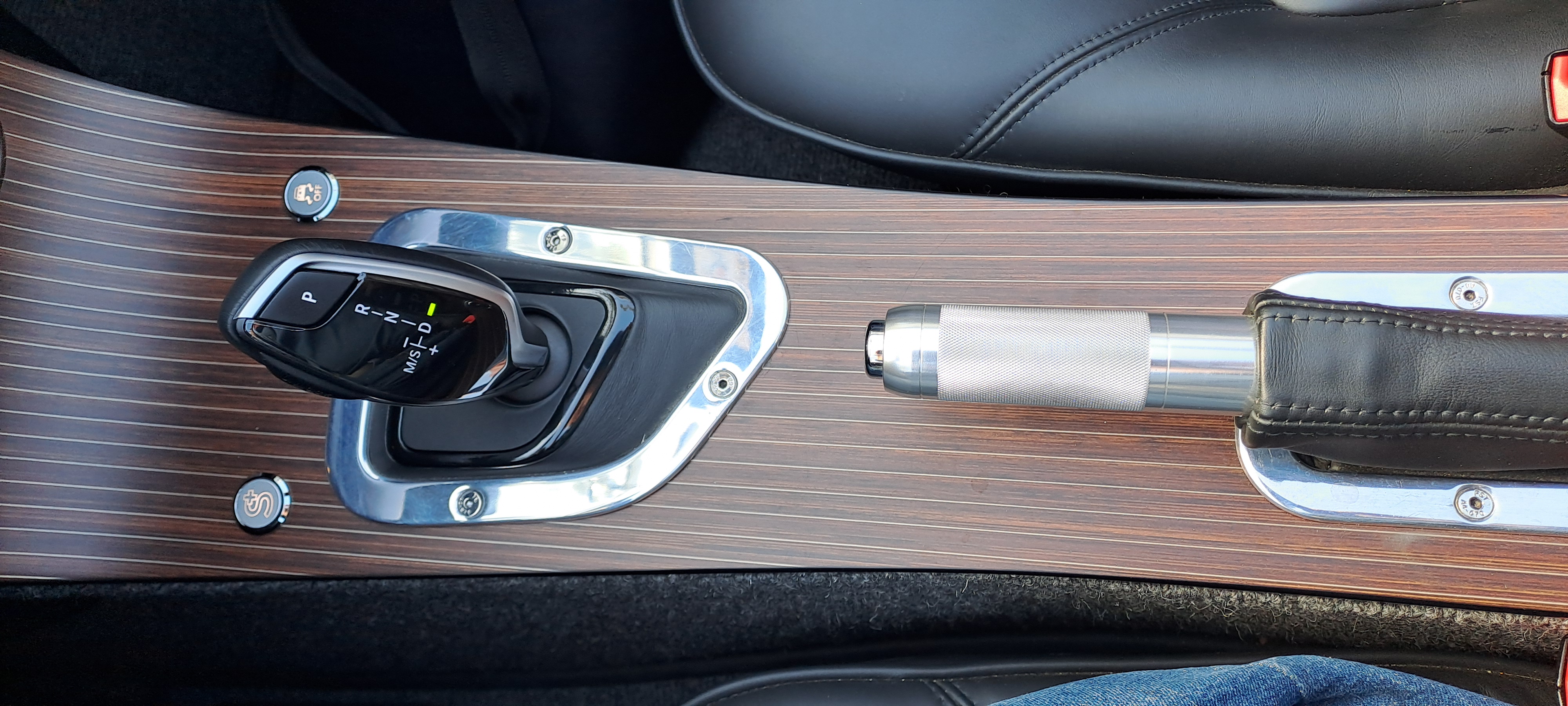
BWM sourced powertrain, and shifter mech, work a treat, so don’t whine for a stick and clutch manual
And Morgan ownership and management is working double overtime to sign and certify a real life sales and service dealer network. As of this writing, there’s but a handful in the US, with more under review and vetting to make sure they’re up to snuff for handling such a unique brand and vehicle. The BMW 2.0-litre TwinPower Turbo inline four-cylinder engine (primarily N20 or B48 families) Key specs include twin-scroll turbocharging, High Precision Direct Injection, Valvetrain variable valve lift, and double-VANOS variable timing, producing high torque at low rpm. In Morgan PlusFour Form, in the U.S. this modern, high-tech I-four is rated at 255 Horsepower at 5500 revs, and a meaningful 295 pounds-feet of torque at just 1550 rpm. Lest you wonder, or are concerned, about a droning, buzzy four-banger powering your traditional British sports car, fear not; Morgan backs this modern motor with a great sounding dual exhaust system that putters nicely at idle, and growls away throatily under power.
So far there’s but one transmission choice offered (or needed) in the new gen Plus Four, that being BMW’s responsive, and equally high tech ZF 8-speed, multi-mode automatic transmission. Its floor shifter console offers a fully automatic Drive mode, plus a gate for driver controlled up and downshifts. Some of you will whine about the lack of an old school clutch pedal and stick shift manual transmission, which is at least a legit question, for which Morgan has a legit answer: Morgan’s own Henry Baker tells us that Morgan does offer a manual box in other world markets, but the cost to certify yet another engine/transmission combination for the United States market is prohibitive based on estimated low buyer take rates,” and the Plus Four’s controlled sales volume as an exclusive, specialty brand and model. So much as we love our stick-and-clutch boxes less and less carmakers are offering them – just try to buy a new Corvette or Ferrari in the U.S. with a conventional manual trans, and that pursuit will dead-end quickly.
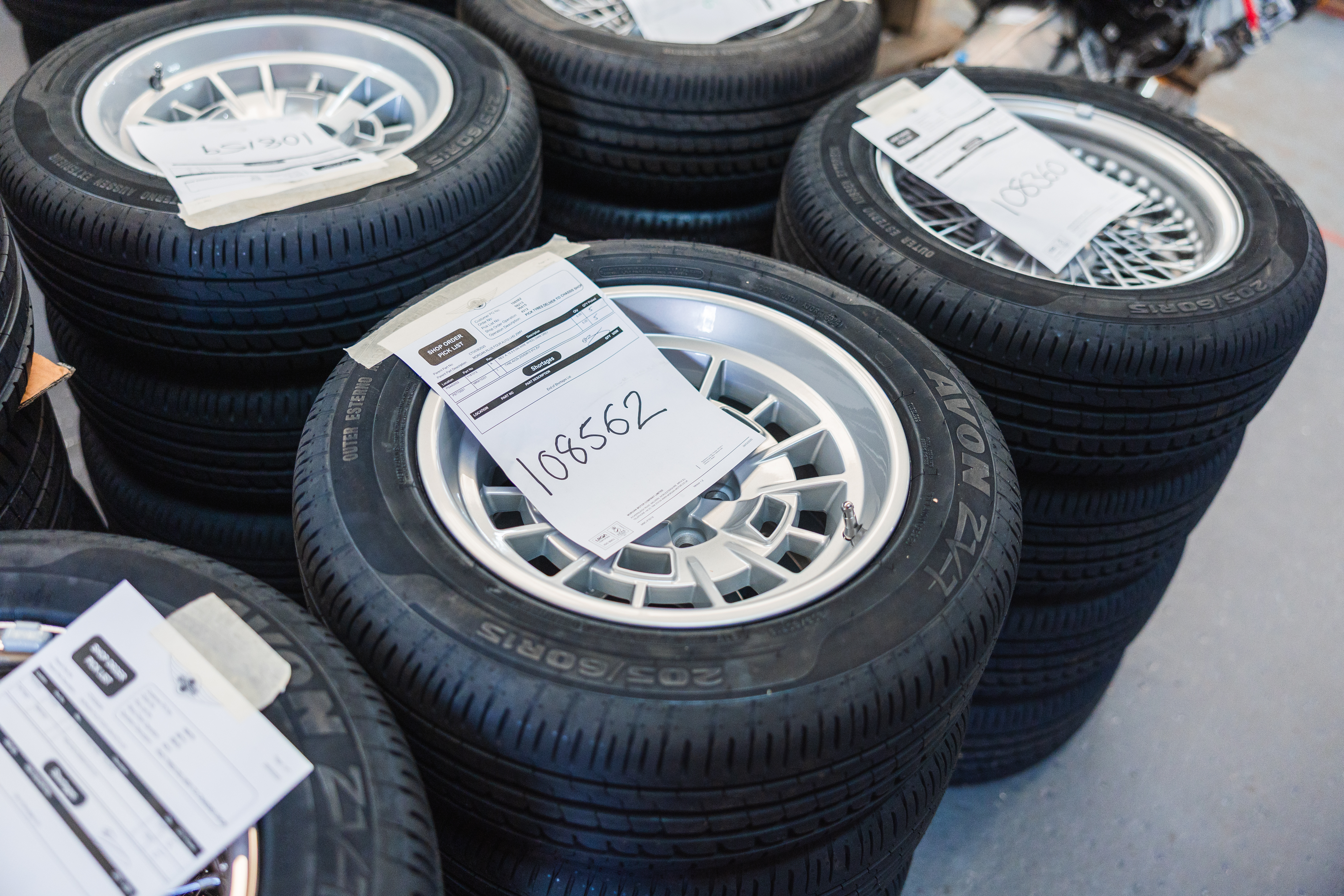
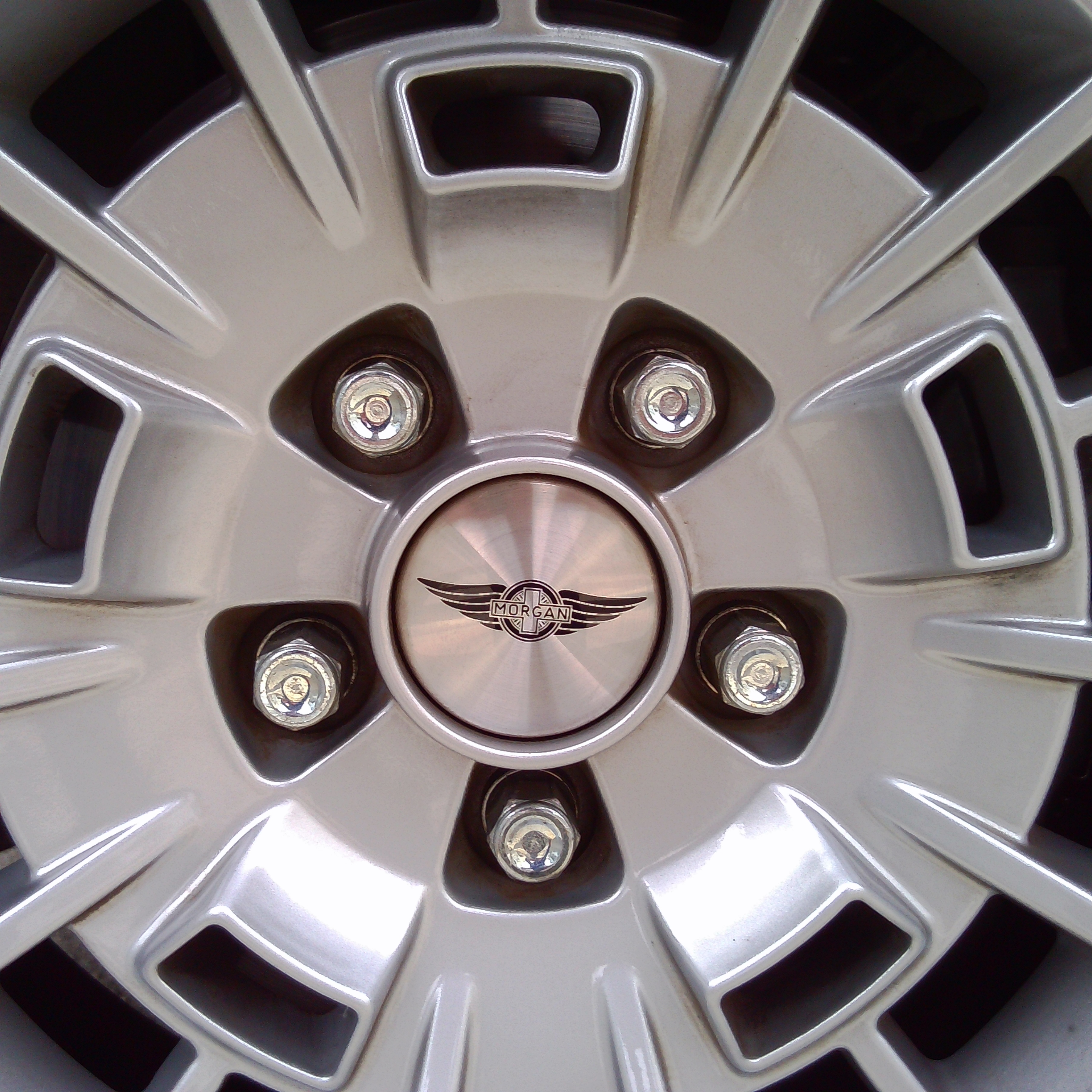
Your optional choice ‘tween alloys or wires, thankfully without O-ring sized, hard riding uber low profile rubber, which would kill the ride quality and be so out of character for the car
The Plus Four’s suspension architecture is still a handling biased double wishbone setup, fore and aft, and there’s also an optional “Dynamic Handling Pack” which offers adjustable dampers, allowing the owner to further tune the balance between ride quality and stiffness and grip levels. The whole dealio rides on a 99.2 inch wheelbase, and measures just a squeedge over 150 inches overall length (putting down a footprint about the same as a Shelby 289 Cobra.
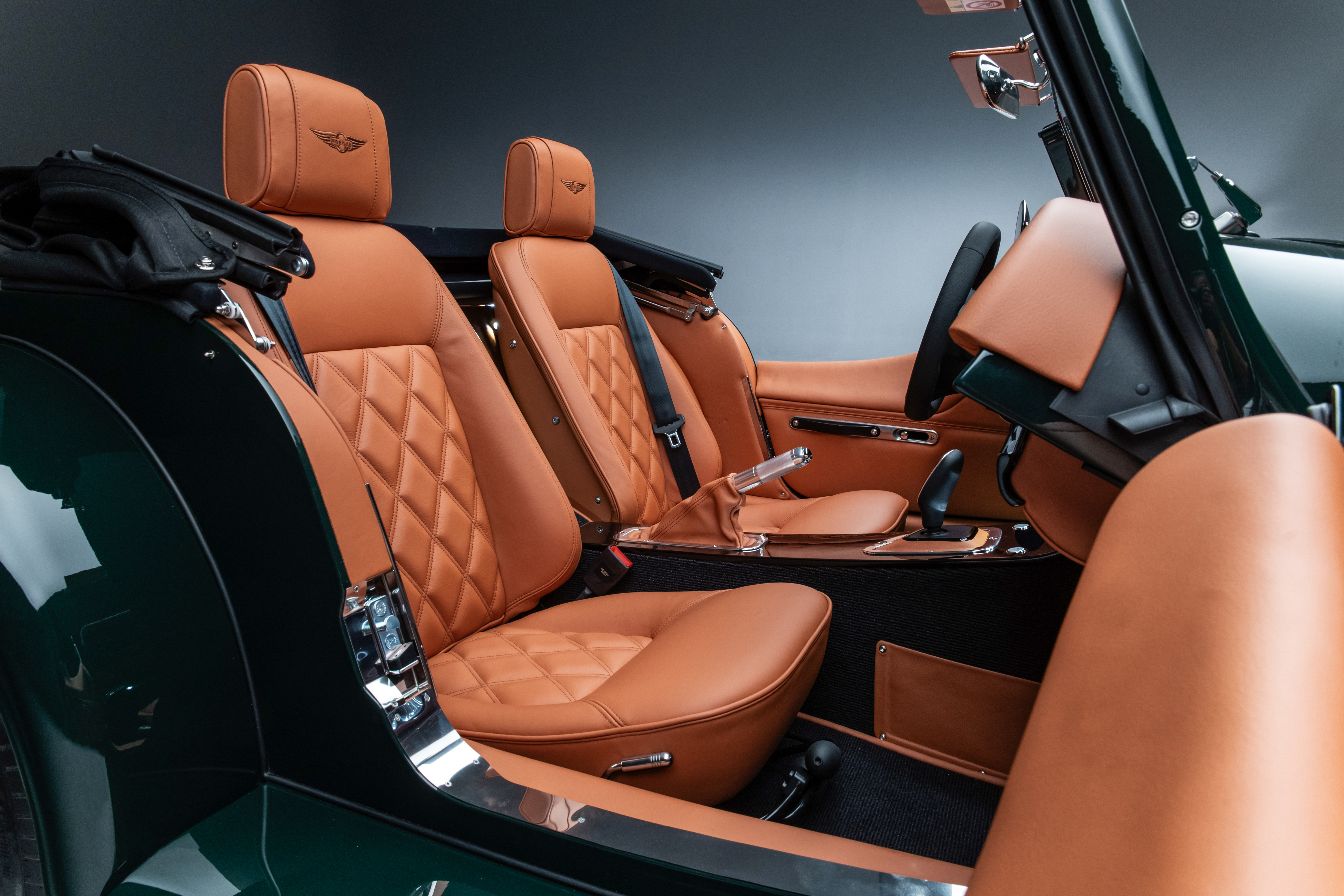
The cabin is either compact, close-coupled, or cozy depending on your outlook. We prefer the middle of these three definitions. But its handsomely trimmed with large and easily read instruments, The seating is of lovely Scottish leather, and the splashes of wood trim are genuine, not plastic, and offer an additional measure of warmth. All controls (and your passenger) are close at hand as you might imagine, there’s factory installed air-conditioning, and a modern infotainment system.
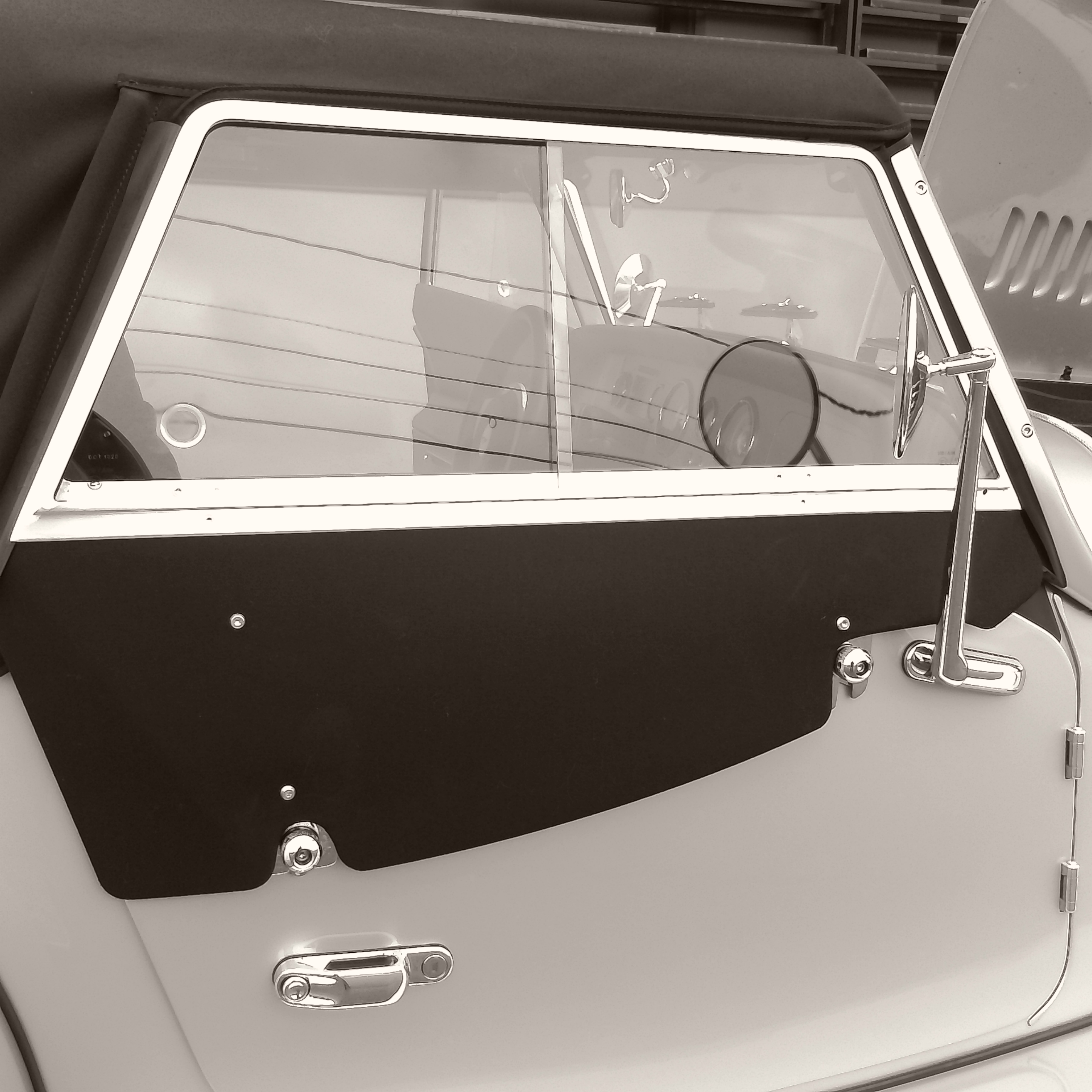

The real entertainment systems, IMHO, are the removeable side windows and doors, and the quick and easy-to-drop cloth convertible top; the latter involves just a couple clips on the A-Pillars, and flipping the top over your head – cozy closed coupe to uber sporty convertible in seconds. Yes – this is a sports car!
And the Morgan’s styling remains uber charming – it doesn’t turn heads, it stops traffic. At some of our South Bay, SoCal photo locations, onlookers walked a considerable distance out of their way to get a better look – some knew what it was, others guessed or asked, but everyone who stopped clearly loved it. Morgan quotes a 0-62 MPH time of 4.8 seconds (the more conventional 0-60 about 4.7, then), and a top speed of 149 MPH – not just quick, but genuinely fast. And it certainly handles nicely, with responsive feelsome steering, sharp, strong brakes, and a commendable ride/handling balance. The use of 60 series tires with a good bit more sidewall than many of today’s modern rocket ships running super large wheels, and ultra-low profile tires. Forget tire-noise and the punishing ride–The ride is firm and connected, without the noise or the pain. Luggage capacity? Not so much – if you want to take a passle of friends, and a few steamer trunks with you, don’t complain about the Morgan, just go buy a minivan.
As you might expect, all this bespoke speed‘nbeauty don’t come cheap. The Plus Four’s base MSRP in the United States is $84,995. And getting carried away with check boxes on the options list will quickly run the example of your dreams and choice to $100K. Yet in the days when a mass produced Mustang can easily cost $50K, and a Corvette bases at $70,000, you don’t have to squint too hard to find your own kind of value message in the notion of a limited production, hand crafted British sports car, and there’s no price limit on the fun you’ll have driving it, nor the value of that smile on your face.
Morgan is deeply committed to making a legit go of it in the United States market, with a craft built, classically conceived yet modern engineered sports car that’ll certainly be the only one on your block, and with a dealer network and factory support that’s been missing for some time. It’s hard to deny the value of all that.
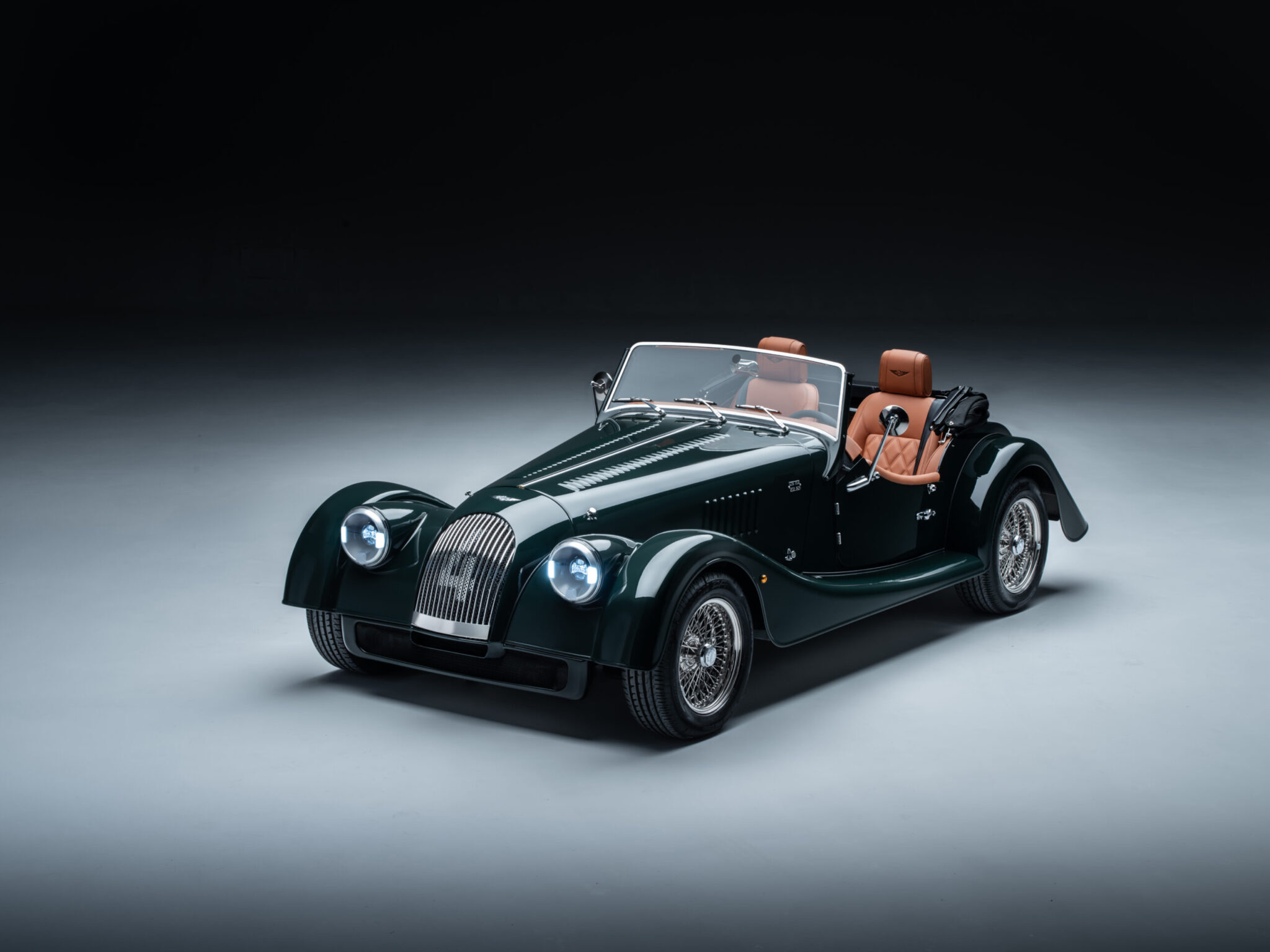
Had I the choice, my new Mogie would be the always correct and perfect British Racing Green over this luscious warm tan-brown leather. Classic, and forever British